
How to Search Criminal Dockets
Every Schley County criminal docket search should begin with the Georgia E-Access Court Records directory. Think of it as a county-to-provider map rather than a statewide case lookup. Its Schley Superior Court entry hands you off to PeachCourt. That screen asks for an email address and a password. Registration and password recovery are offered. But no guest criminal search, result columns, coverage dates, or document prices appear before signing in. When you know the court and case number, use both exactly. Without them, gather details first. Collect the defendant's full name, the likely filing year, the charge, and the record type before you start. A bare name can pull the wrong court or the wrong year. And if PeachCourt will not open, or the case does not surface there, call the Superior Clerk rather than concluding no record exists.
- Identify the court from the charging paper, notice, or most recent setting.
- Use Georgia E-Access to confirm that Schley Superior Court routes to PeachCourt.
- Sign in or register if authorized, then search with the exact case details requested.
- Check the court, charge, latest setting, and disposition on the matching docket.
- Ask the responsible clerk for a filed paper or certified copy when an online entry is not enough.
Schley PeachCourt Has an Account Gate
Online access at PeachCourt stops at an account gate. The public landing screen shows sign-in controls. It offers no fields for a defendant, case number, date, or charge. There is no way to know what search tools appear until you log in. So a Schley County criminal docket search can dead-end before you ever type a name. That is normal here, not a sign the case is sealed.
The fallback is Kimberly McKinney, Clerk of Superior Court. The official Georgia clerk directory places the Schley County Superior Clerk at 47 North Pecan Street, P.O. Box 7, Ellaville, Georgia, telephone 229-937-5581. Counter hours run 8:00 a.m. to 5:00 p.m. The office closes for lunch from noon to 1:00 p.m. Call before mailing anything. The county publishes no local criminal copy form, payment method, turnaround time, or Superior certification fee. So the clerk will have to quote those.
For the bigger picture, turn to the Georgia court-class overview. It explains why the court level must come first in any search.
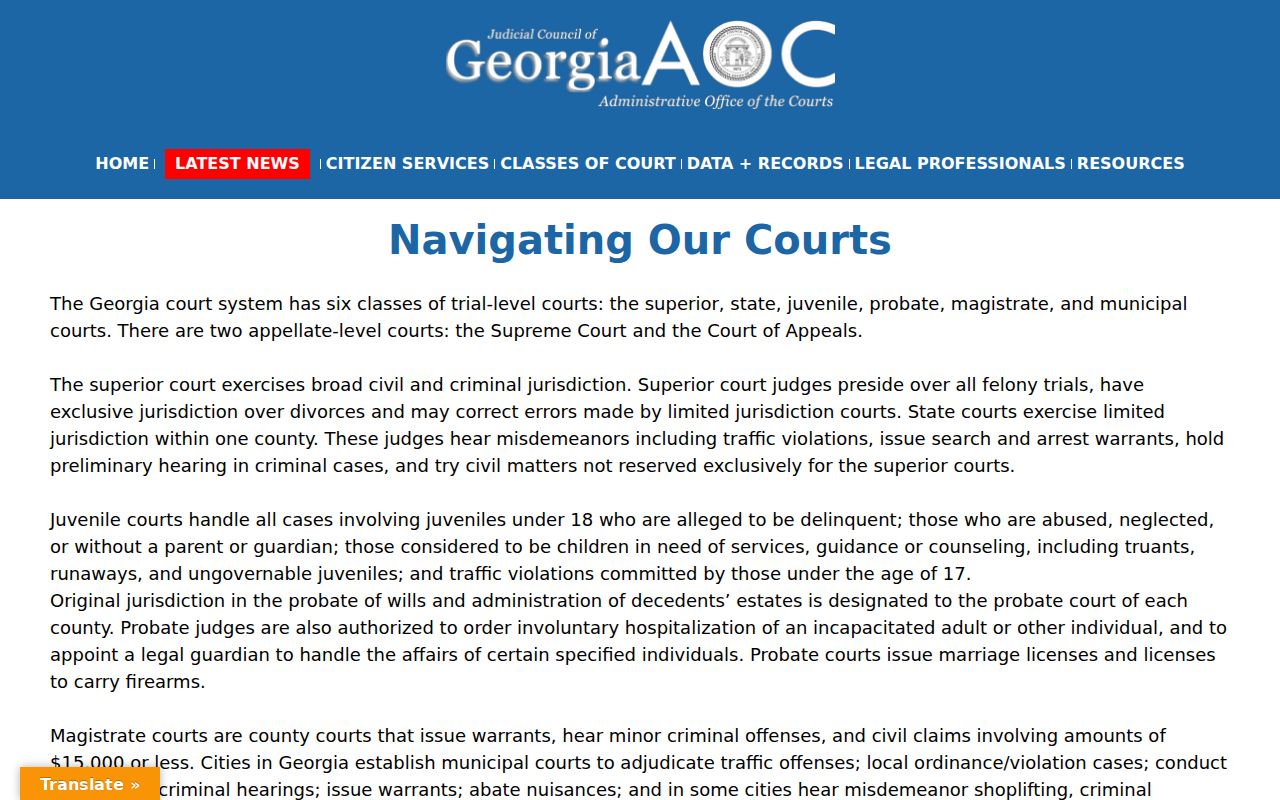
The court hierarchy explains the split. A warrant event, a city citation, and a felony prosecution can each point to a different holder of Schley County criminal records.
What a Criminal Docket Shows
Georgia Uniform Superior Court Rule 39.3 offers the clearest official field model for reading docket entries. Treat it as a template. A public criminal docket may not show every field the rule allows. The local order of entries can differ, too. The safest habit is simple. Read each line as a single event, not a summary of the whole case.
| Case identity | Case number, filing date, defendant, judge, and offense classification. |
|---|---|
| Charging record | Accusation or indictment, offense counts, and citation number when relevant. |
| Settings | Arraignment, motion, plea, or trial dates, plus later resets. |
| Plea and trial | Plea, plea date, negotiated-plea marker, and jury or nonjury treatment. |
| Disposition | Outcome and date, sentence terms, costs, fines, or restitution where public. |
| Later activity | Transcript, notice of appeal, remittitur, sentence review, or correction entries. |
Georgia's case-number rule builds each number from a year, a case type, a sequence, and sometimes a judge assignment. The county's own abbreviations are not published. Copy the full number exactly as the clerk or docket shows it.
Schley Criminal Calendar Labels
The Southwestern Judicial Circuit's Schley calendar page sorts criminal settings into three labels: Calendar Call and Arraignment, Criminal Motion and Plea, and Criminal Trial. Labels like these are calendar categories only. They do not replace the filed Schley County criminal docket, and a name on a plea calendar proves neither a plea nor a conviction.
Calendar call lets the court organize its pending matters. Arraignment is the formal stage where charges are read and a plea is entered. A motion and plea calendar can hold a hearing on a request, a negotiated plea, or another pretrial event. Trial calendars list matters called or considered for trial. Whatever the setting, the later docket entry and disposition tell you what actually happened.
The official posting can be viewed at this Schley Superior criminal calendar source.
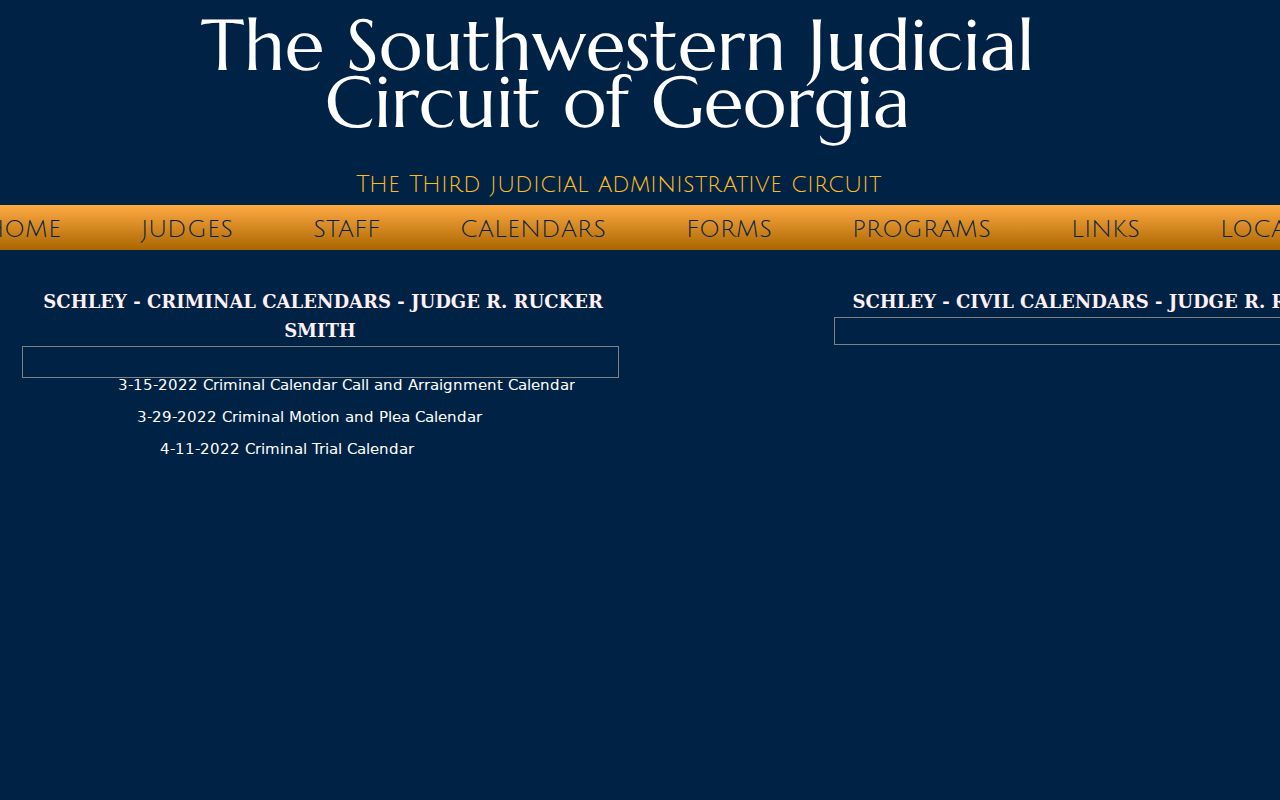
The posted categories classify a setting, but the case docket and clerk confirm what actually occurred.
Stages on a Criminal Docket
A Schley County criminal docket often starts after a warrant or an arrest, yet neither event equals a filed prosecution. Superior Court records keep the accusation or indictment distinct from earlier custody activity. From there the case advances through settings and filings that may include arraignment, pretrial motions, plea talks, trial, and a disposition.
Docket flow: Filing › Arraignment › Pretrial › Plea or Trial › Disposition › Sentencing
A bond entry is not a disposition. It may describe release terms, a warrant return, or later forfeiture activity instead. Remember that a motion is only a request until an order resolves it. Even the word "disposed" needs context. The label may attach to one count rather than the whole case.
- Accusation
- A prosecutor-filed charging instrument used for eligible offenses.
- Indictment
- A charging instrument returned by a grand jury.
- Nolle prosequi
- A prosecutor's decision not to continue a charge, subject to the exact filed entry.
- Remittitur
- The appellate court's formal return of the result and jurisdiction to the trial court.
Schley Specialty Dockets Stay Circuitwide
Schley County felony cases flow through the Southwestern Judicial Circuit. The circuit runs treatment programs alongside its regular criminal docket. A Problem Solving Court and a Drug Court appear on the Southwestern Judicial Circuit programs page. Beyond those names, details stay thin. The page posts no Schley-only docket. It offers no public search portal, and no local eligibility list, venue, or program term. A case accepted into a program usually keeps its ordinary Superior Court number, so the Schley County criminal docket may look unchanged even while program information stays limited.
The circuit program source is the official page to check for what each program actually offers.
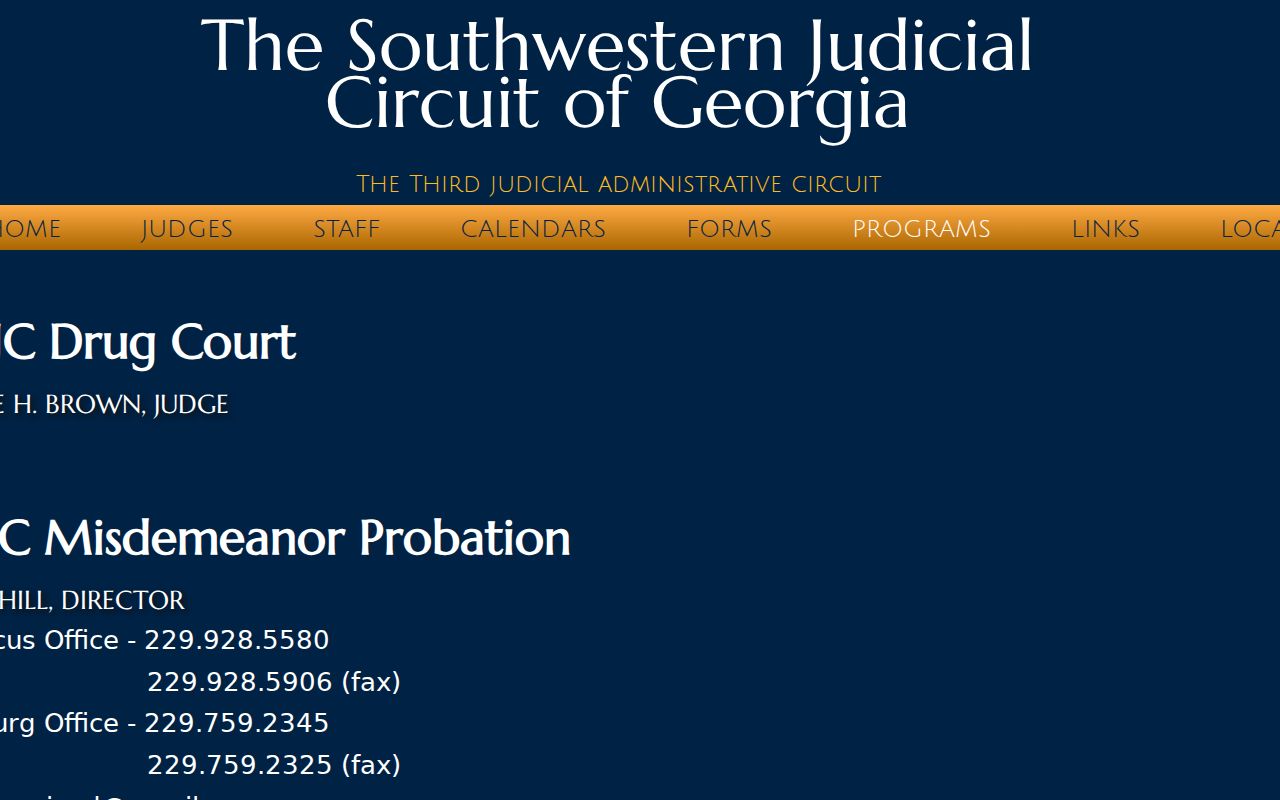
Careful routing, not guesswork, is what the circuit listing supports. It gives no basis for inventing a separate Schley County specialty-court database.
Chief Judge R. Rucker Smith is associated with the Problem Solving Court. Judge Jimmie H. Brown is associated with Drug Court. When a public case entry seems unclear, program staff or the Superior Clerk can explain how to read it.
Which Court Holds Criminal Dockets
Start with the right court. Schley County Superior Court holds the felony indictments and accusations. It also holds the criminal filings tied to them, plus the Superior misdemeanors the county assigns to that level. Kimberly McKinney keeps those records as clerk.
Magistrate Court takes care of initial warrants and a few lower-level criminal tasks. Its clerk is Sharon Miller, at 47 North Pecan Street, phone 229-937-5110.
Ellaville Municipal Court covers city traffic and ordinance cases. It works through City Hall and the municipal clerk there. It does not run a public docket viewer with PeachCourt. Juvenile cases follow their own confidentiality rules. Schley County names no standalone Juvenile clerk contact. So match the court on your paperwork before you search anything.
The Georgia court rules index lists the current rules by court class. It confirms that each level answers to its own set.
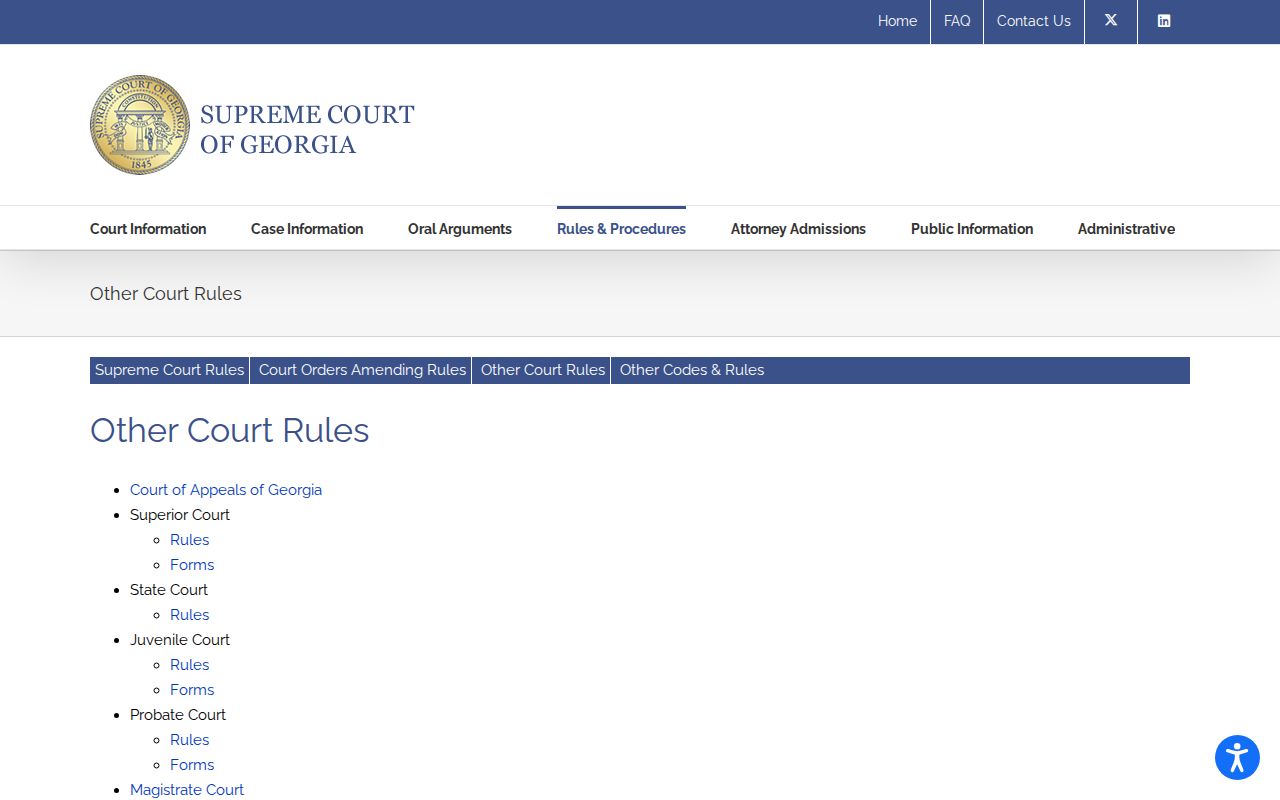
Different rules for different courts. That is why any Schley County criminal search starts with venue, not just a name.
Older Schley Criminal Files
A blank portal result does not always mean the case vanished. The spelling may be off. So might the year, the court, or the account route. Plenty of older Schley County criminal files live only on paper. They sit in bound books, on microfilm, or as retained records. Georgia's Superior Court rules allow those older practices. Schley County publishes no microfilm years and no local retention schedule. The clerk fills the gap.
Ask the Superior Clerk to search by full name. Add the case number if you have it, plus the filing year, the charge, and the document type. Say which document you want. Options include a docket sheet, an indictment, an accusation, a judgment, or a certified copy.
Transcripts work differently. They are produced through a court reporter. Route that request using the circuit's reporter information, rather than expecting a clerk-generated docket image. Schley County posts no official schedule of copy, certification, transcript, or search fees. Note: Saving an image of an entry can hold a quick reference. But only the responsible clerk can issue a certified Schley County criminal court record.
Public Access and Sealed Criminal Dockets
Public access is the default for Schley County Superior Court records. Uniform Superior Court Rule 21 governs that default. A statute or a qualifying court order can still seal a file. Rules 21.6 and 36.17 add another layer of care: protected identifiers do not belong in public filings. So a criminal docket can be open to the public yet free of full Social Security numbers, financial account numbers, and full birth dates.
Georgia record restriction under O.C.G.A. §35-3-37 works differently than many people hope. It does not automatically wipe every entry from a court docket or from criminal-history files. The official Georgia restriction resource lays out the arresting-agency and prosecutor routes that can apply. Keep three questions separate: who can see the court docket, who can pull a criminal history, and who can view document images.
The Georgia record-restriction source is the state's own explanation of how restriction works.
That process is narrow by design. It is not a blanket order sealing every Schley County criminal docket entry.
Juvenile, sealed, adoption-related, and legally restricted records may be absent or redacted. Ask the responsible clerk what access rule and requester proof apply.
Schley Criminal Caseload Caution
Treat circuit numbers with care. The official 2024 workload assessment counts the Southwestern Judicial Circuit as one six-county unit. It reports criminal averages of 1,228 defendants across several offense and revocation groups. That figure is regional context, not a Schley County filing count. Divide it by six or by population and you invent a county statistic nobody published.
Georgia's court statistics dashboard also warns that the counts are self-reported. They count cases, not individual records. No official static report gives Schley County annual criminal filings. There is no pending inventory or clearance rate either. For real answers, use the docket for a specific case. Ask the clerk about a local record.